

stainless steel aluminum alloy copper bar products LuoyueMetal


Galvanized Steel Grating Metal Building Drain Grating
Product Overview
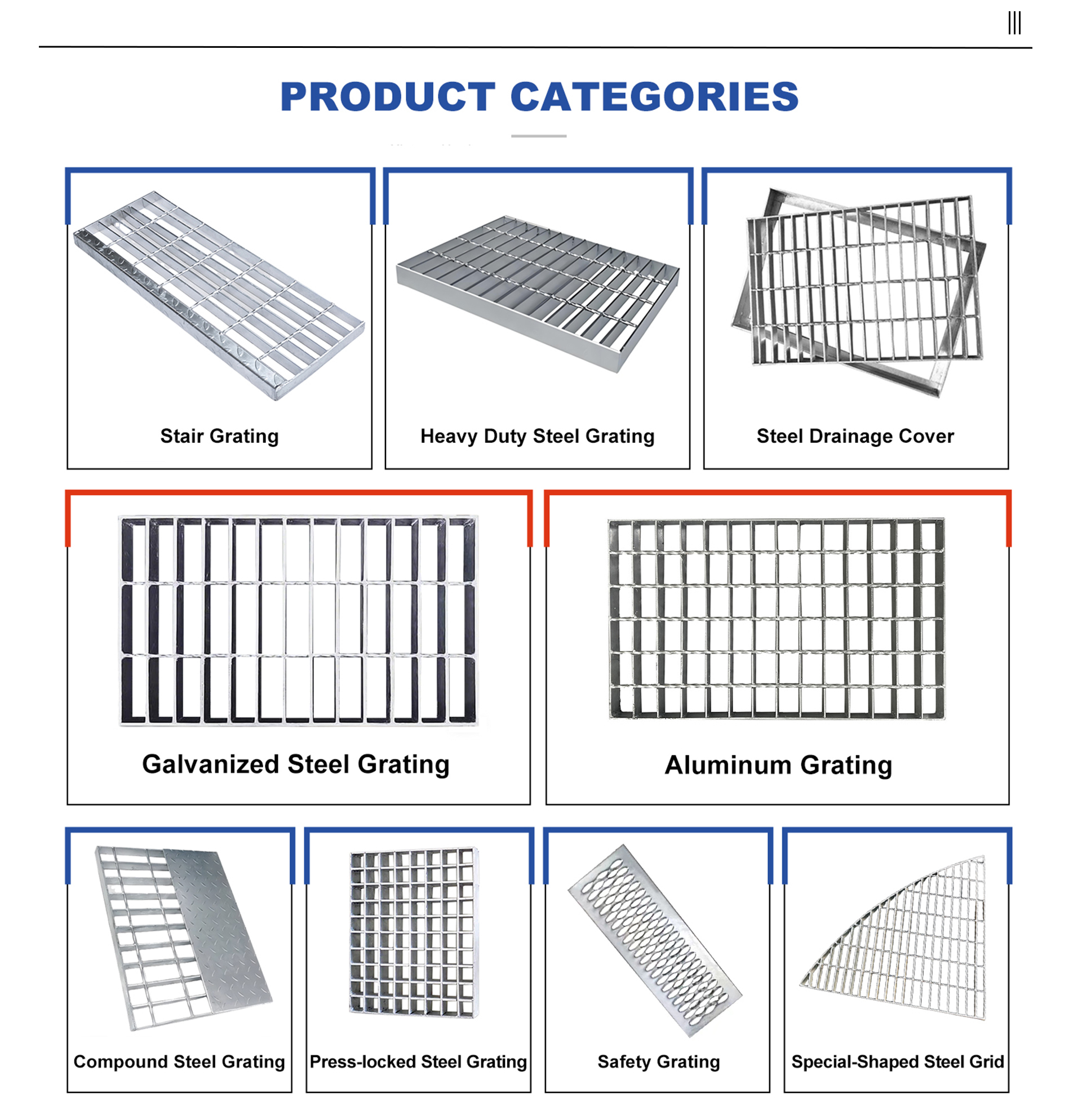
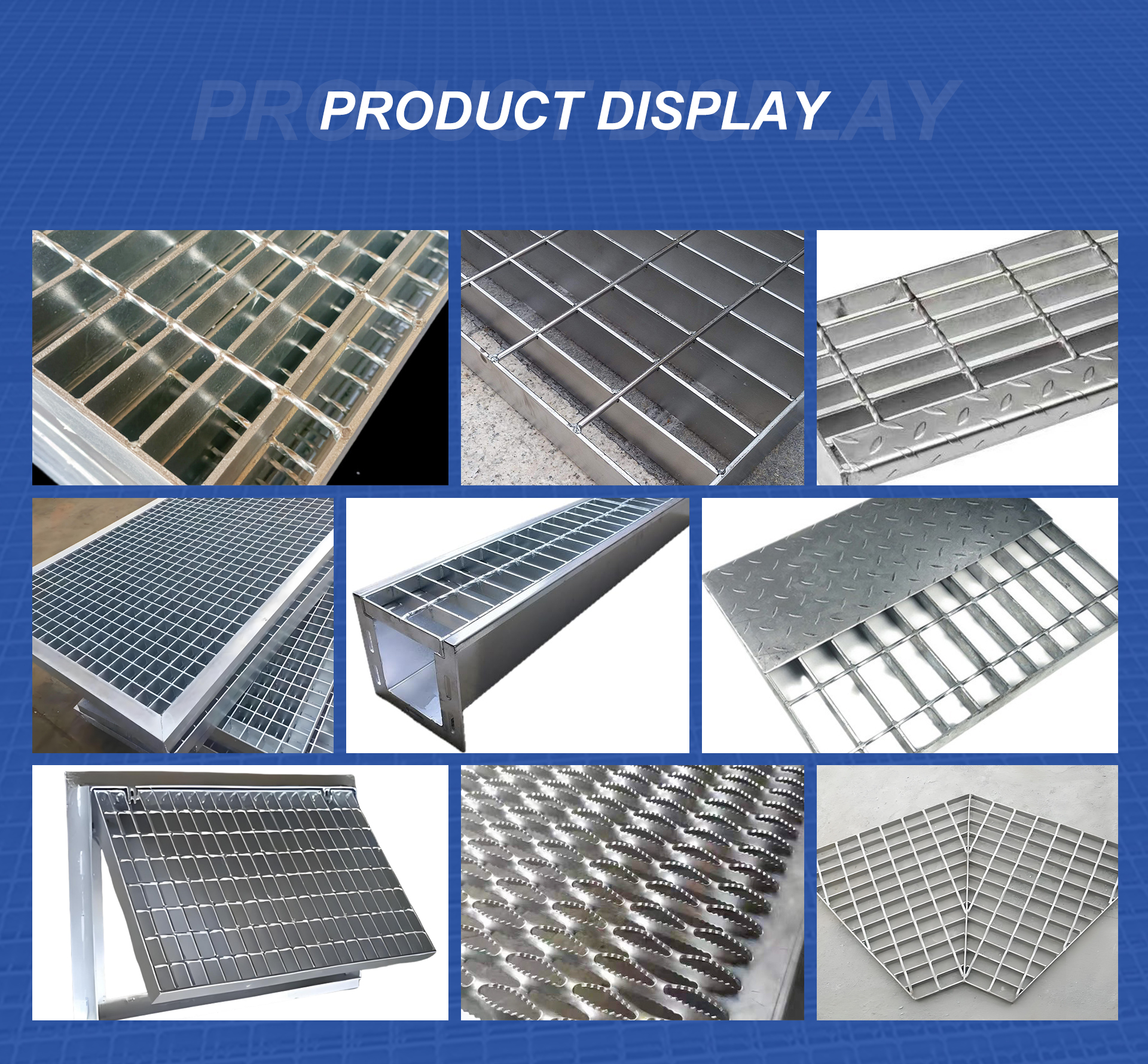
Galvanized steel grating for platform flooring, drain covers and building drainage. Panels are assembled from flat or serrated bearing bars crossed by transverse bars, then hot dip galvanized so weld points and cut edges are coated as well as the flat faces.
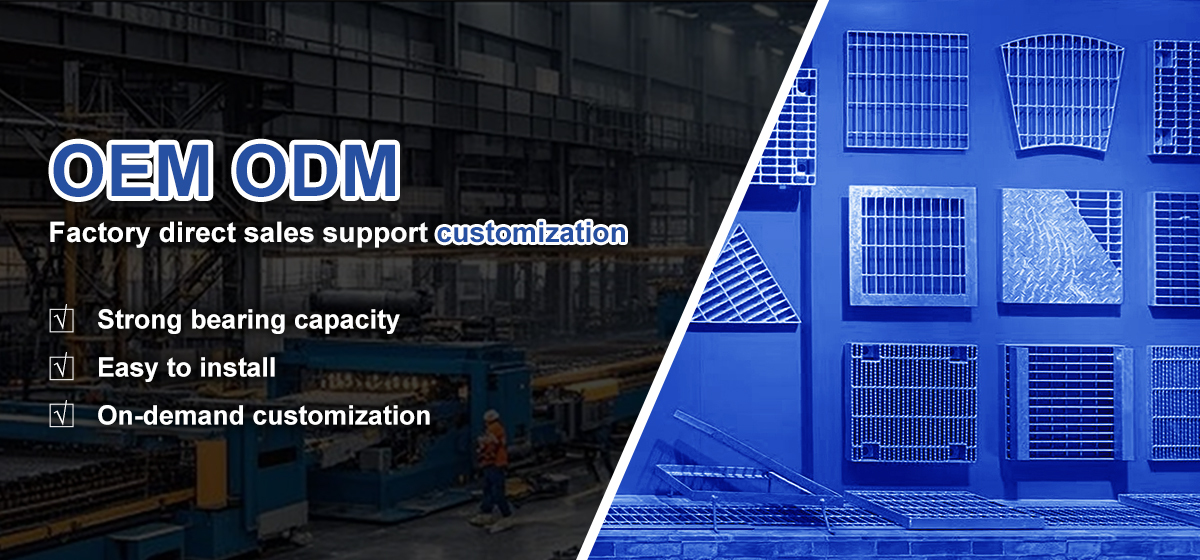
The listing photos show workshop equipment, sample panels and the wider grating family, which reflects made to order supply rather than a fixed stock list. Span, bearing bar arrangement and coating requirement are confirmed against the project drawing.
Grating Structure and Terminology
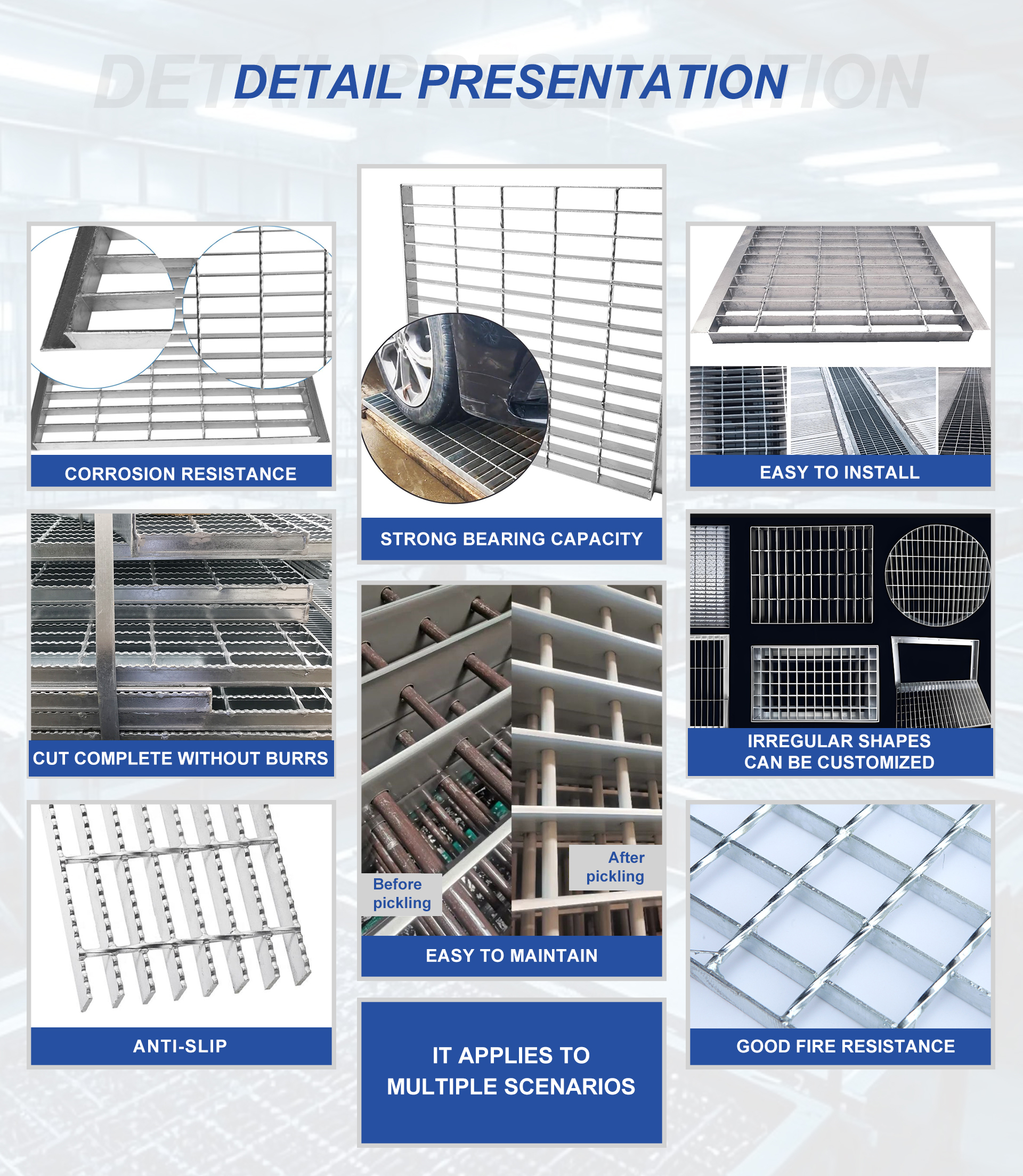
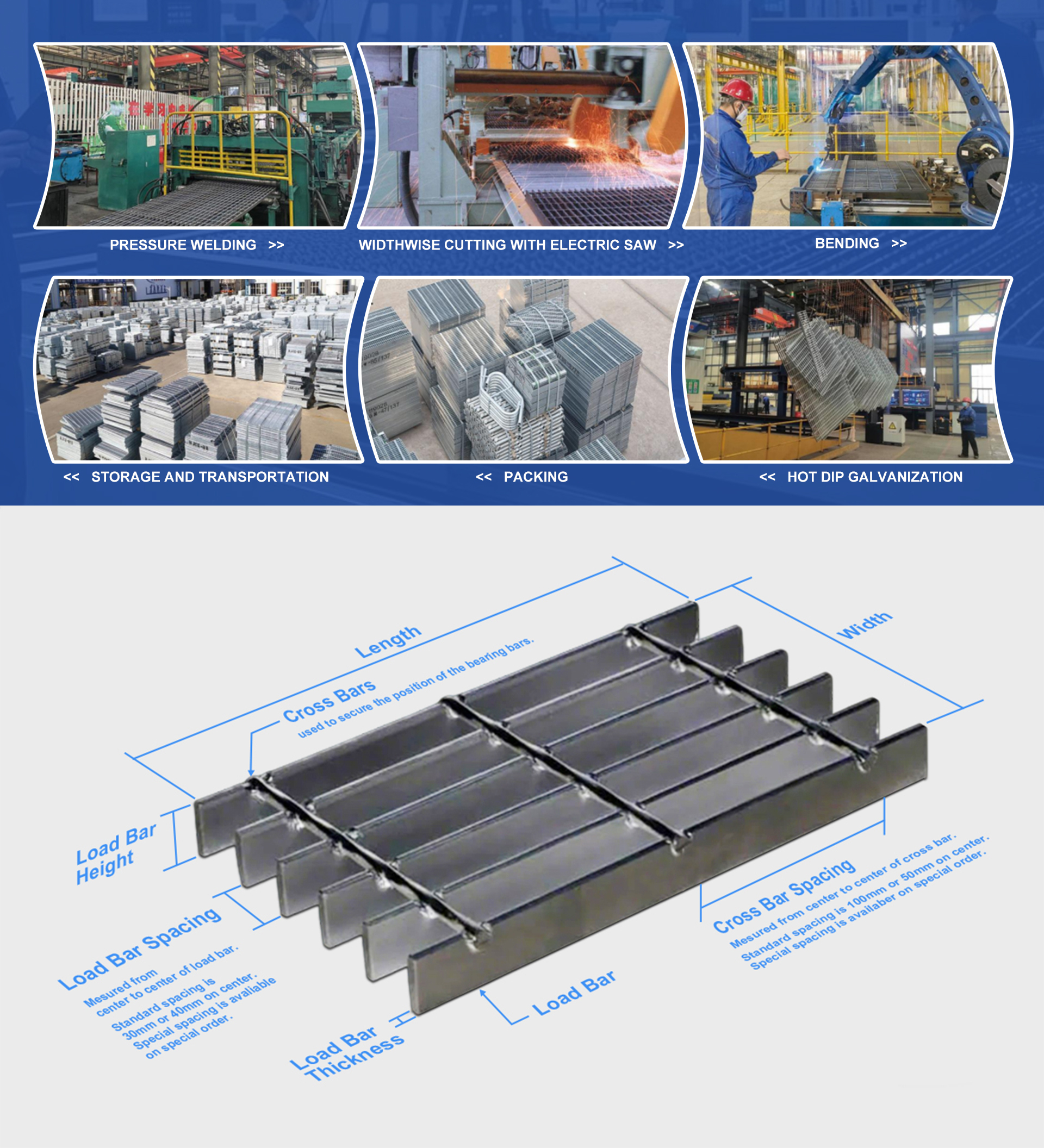
Grating is specified by naming its parts, because each one is adjusted separately. The annotated sketch in the process photo strip labels these dimensions.
| Term | What it is | What it governs |
|---|---|---|
| Load bar | Parallel bearing bars spanning between supports | Strength and stiffness |
| Load bar height | Vertical depth of the bearing bar | Bending resistance across the span |
| Load bar thickness | Section thickness of the bar | Local wear and deflection |
| Load bar spacing | Pitch between adjacent bearing bars | Open area and load distribution |
| Cross bar spacing | Pitch of transverse rods | Lateral stability between bars |
| Serrated face | Saw tooth profile on the bar upper surface | Slip resistance when wet or oily |
| Edge banding | Border flat fitted around the panel edges | Edge stiffness and how the panel sits in its frame |
Common industry arrangements place bearing bars at a 30 mm or 40 mm pitch and cross bars at a 100 mm or 50 mm pitch. These are general options to discuss at the inquiry stage, not confirmed values for the panel shown here.
How Galvanized Grating Is Selected
- Span and supports: Distance between supporting steel sets bearing bar direction and depth.
- Loading requirement: Pedestrian, maintenance traffic, carts or vehicular duty are separate design cases to be declared by the engineer.
- Open area: Bar pitch decides how much water, light and debris passes through, which matters for drain covers and stairs.
- Slip resistance: Plain bars suit dry indoor areas; serrated or punched surfaces are used where water, oil or dust is present.
- Panel geometry: Cut outs, non rectangular shapes, hinges and handrail openings are produced to drawing.
Production Process
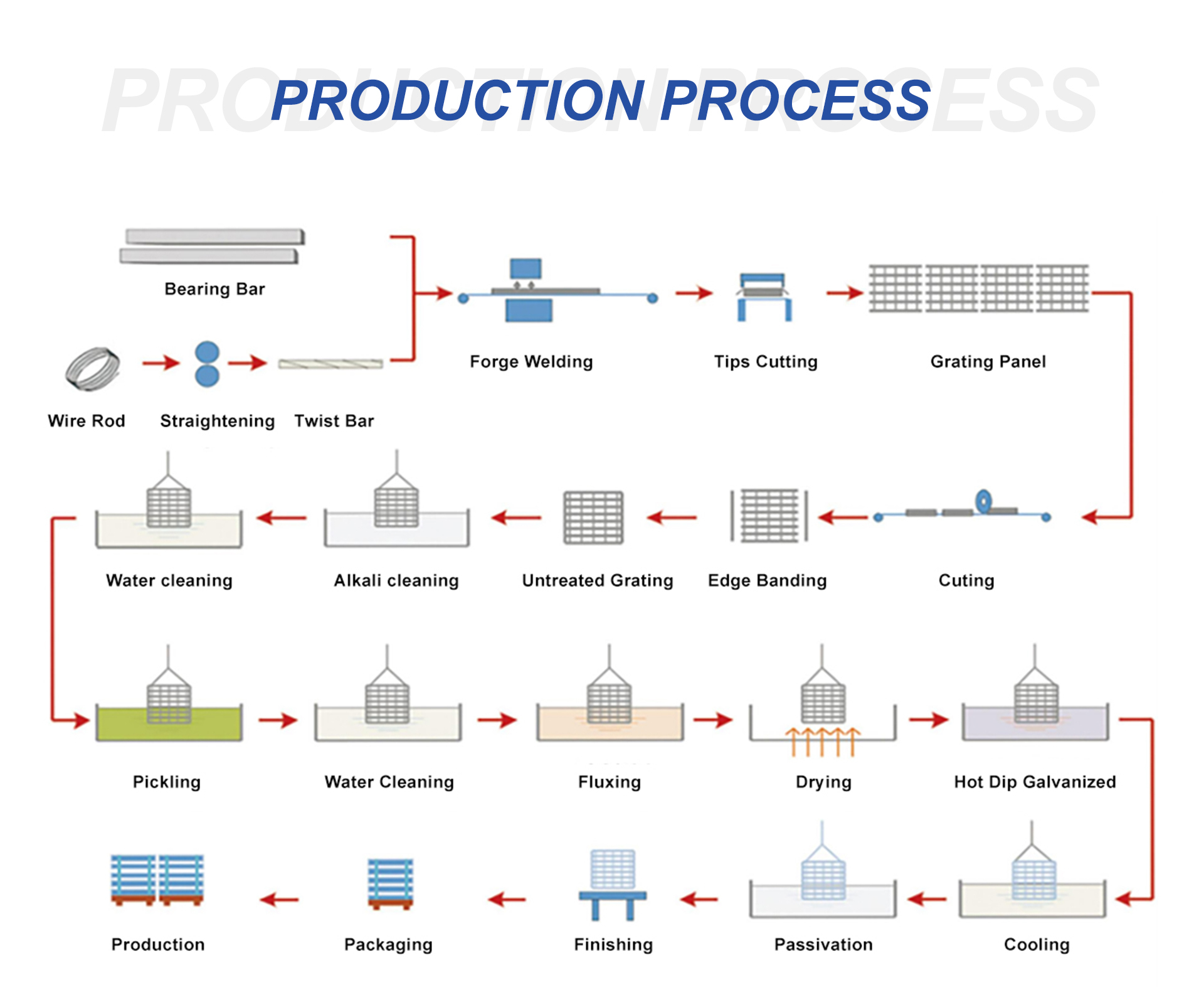
- Press welding: Bearing bars and cross bars are fixtured and resistance welded at each intersection.
- Saw cutting: The welded sheet is cut to panel size and shape, including cut outs.
- Bending and edge banding: Edges are dressed and border flats fitted so panel ends are closed and square.
- Surface preparation: Scale, oil and weld residue are removed so the coating can bond.
- Hot dip galvanizing: The assembled panel is immersed in molten zinc.
- Passivation, packing: The cooled surface is treated against storage stain, then panels are bundled and identified.
Typical Applications
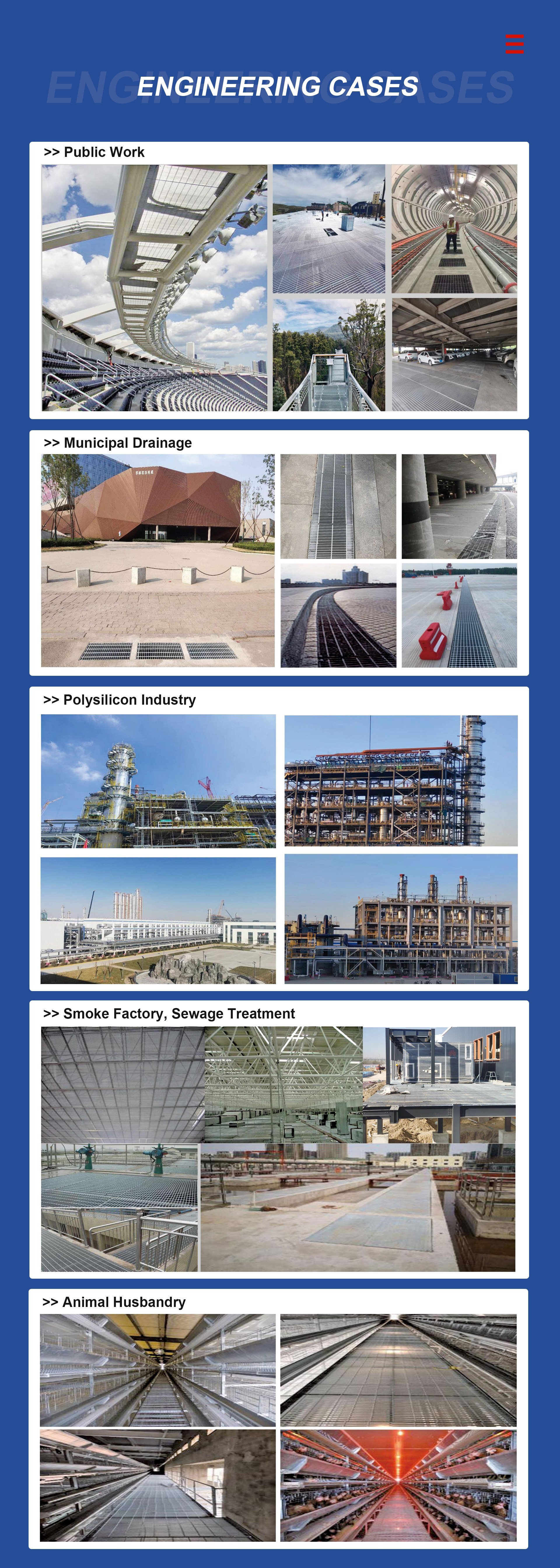
The engineering case collage groups installations into public buildings, municipal drainage, industrial plant areas, wastewater and flue gas treatment, and agricultural buildings. Each uses the same property set: an open surface that sheds water, carries repeated traffic and survives weather without frequent repainting. More panel types sit in the drain grating category and the drain cover category.
Project note: Cutting or drilling after galvanizing exposes bare steel. Confirm whether panels are finished to size at the factory or trimmed on site, and specify fastener material so the fixing points do not become the weak link. Transit protection is described under packaging and logistics.
Frequently Asked Questions
Can you provide a load table?
Capacity depends on bar depth, thickness, pitch, span and edge support, so a load statement has to be built from the arrangement chosen for your project rather than quoted generically.
Can panels be made to irregular shapes?
Yes, the display photos include fan shaped, wedged and framed pieces. Send a layout showing openings, column positions and cut outs.
Which finish suits outdoor drainage?
Hot dip galvanized carbon steel is the usual choice for exposed drainage; stainless is considered where washdown, chemistry or appearance govern. Routine questions are on the site FAQ.
What does OEM and ODM involve?
Panels built to customer drawings, with marking, packing and documentation arranged per contract.
Related Products
Match these panels with trench drain grating covers and read about the coating on the hot dip galvanized open mesh grating page.
Ask for a grating layout review.
Send spans, support conditions, required loading, panel sizes and slip resistance preference; the proposal is written back to those inputs.

Your cart is currently empty.